Quick Link
Selecting an assist gas in fibre laser cutting directly impacts the quality of a cut, project timescales, and overall cost. For many buyers, understanding the right gas for each component is not always clear, especially across different materials and their thicknesses.
At The Laser Cutting Co., we aim to guide you ahead of your next project by explaining the distinct differences between nitrogen, oxygen, compressed air, and mixed gases used in laser cutting.

Why are Assist Gases Required in Laser Cutting?
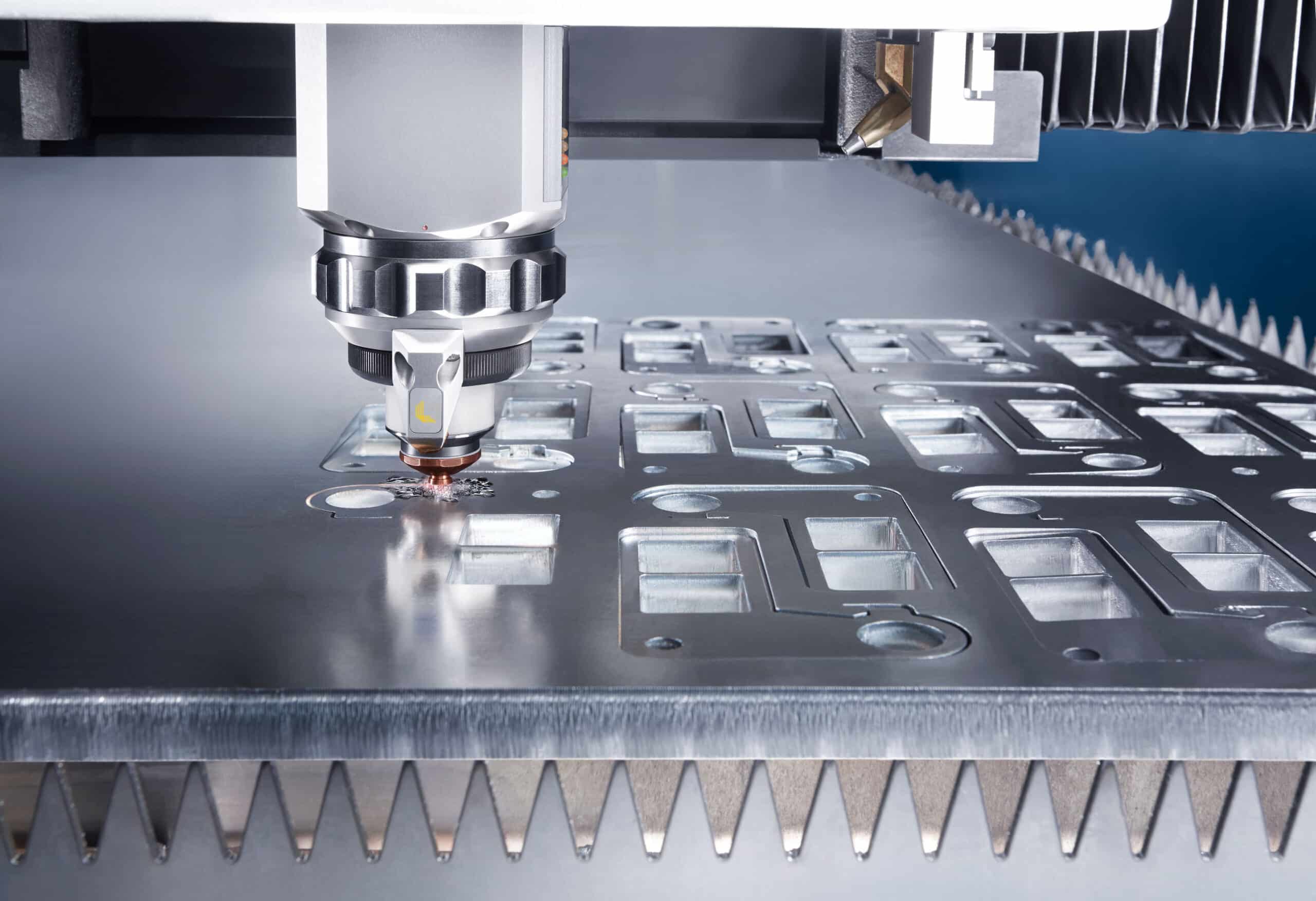
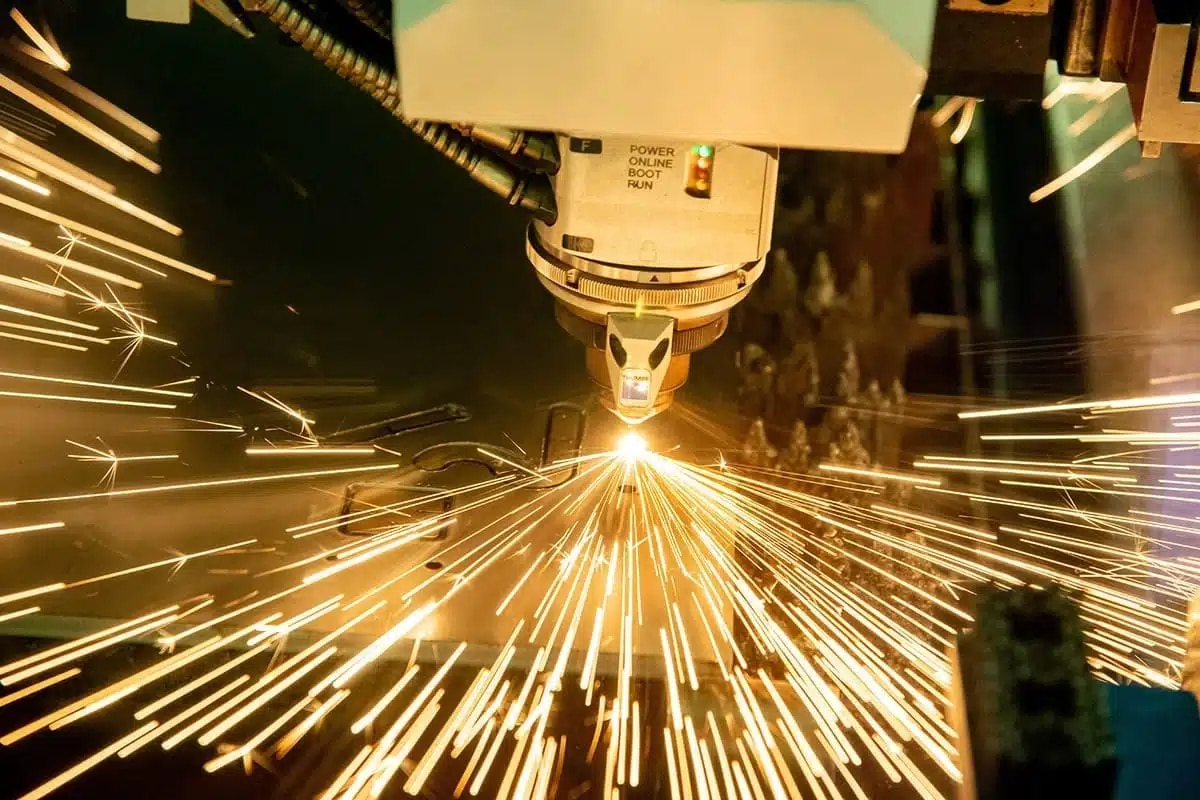
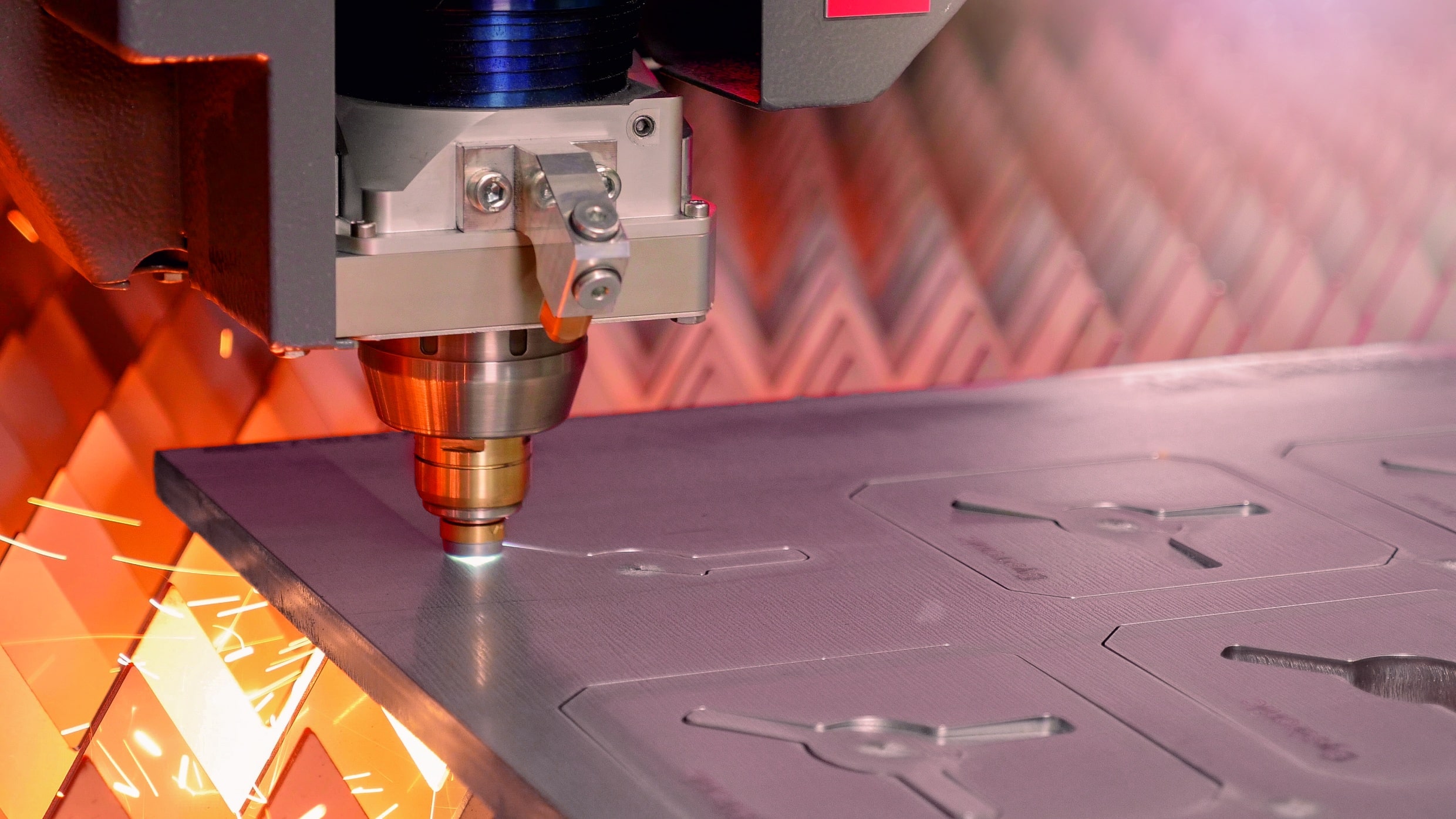
Assist gases provide a practical purpose during profiling. They are necessary for clearing molten material from the zone to protect the lens and avoid excess material re-solidifying as debris, therefore creating a cleaner and higher-quality cut. They’re also critical for thermal management of the surrounding material to eliminate distortion, and without the use of gases, consistent cut results would not be possible to achieve.
What are the Most Common Assist Gases?
Oxygen
Oxygen for laser cutting is commonly used for cutting carbon and mild steel, particularly on thicker materials. It is known to support an exothermic reaction, which means it contributes heat to the cutting process and creates a quicker cut with lower energy output.
The main advantage of oxygen as an assist gas is its speed on thicker carbon steels, which makes it ideal when productivity and tight deadlines are a priority. However, the reaction of oxygen leaves behind an oxidised edge, which may require secondary processing if a clean surface is required for painting or welding. Overall, this makes oxygen an ideal gas where post-processing is already part of a project’s expected workflow.
Nitrogen
Nitrogen is an inert gas, meaning it does not react with the material during the cutting process. Rather, it acts purely as a highly pressurised jet to remove molten metal during the cutting process. This ultimately results in a clean, super-precise edge with no oxidation to consider. For stainless steel, aluminium, and applications where visual quality is important, nitrogen is the standard and removes any need for secondary processing or cleaning.
The initial drawback of using nitrogen is its elevated cost due to gas consumption and the need for higher pressure, resulting in more energy use and slowing down production for thicker materials. Nitrogen for laser cutting is most suitable for precision work where the finished quality cannot be compromised.
Air
Compressed air is occasionally used as a lower-cost alternative, as it contains a mix of natural gases, including nitrogen and oxygen. Although the air reduces gas costs, it does not deliver the same level of consistency or edge quality as pure nitrogen and oxygen.
While air is effective for thinner materials and less critical applications, it may also introduce slight oxidation and variability depending on the system and material. Therefore, compressed air tends to be used in projects where budgets are more restricted, rather than for high-specification work.
Mixed Gas Cutting
Recent technology in laser cutting has introduced mixed gas cutting into the process, utilising unique blends of nitrogen and oxygen. This approach brings out the strengths of both gases, resulting in significantly faster cutting speeds, particularly on thicker materials, without sacrificing edge quality. Despite oxygen being present, the specialised mix of nitrogen helps to limit oxidation, leading to a cleaner finish.
Consequently, rapid cutting reduces machine time, lowering production costs and enhancing operational efficiency. At the same time, the need for additional processing is greatly reduced, allowing customers to benefit further from shorter lead times without compromising on the final product.

Selecting the Right Assist Gas for your Laser Cutting Project
Assist gases are essential to the laser cutting process, and there’s no individual option that can be applied across all projects. An experienced laser cutting provider is capable of helping businesses make an informed decision based on material type, thickness, budget, and their desired outcome.
- Oxygen is most suitable for mild and carbon steels, particularly on thicker materials.
- Nitrogen is ideal for stainless steel, aluminium, and non-ferrous metals.
- Mixed gas cutting can be used across a broader spectrum, including all previously listed metals.
Achieve Exceptional Quality with The Laser Cutting Co.
At The Laser Cutting Co., we have a wealth of knowledge in laser cutting, covering complex and large-scale projects for over four decades. Our team are always available to help determine the best solution for your project needs, with services such as laser cutting, waterjet cutting, plasma, bevels, pressing, smart design production, and more.
To see how our expert team can support your desired project outcome, please get in touch with a member of our team.