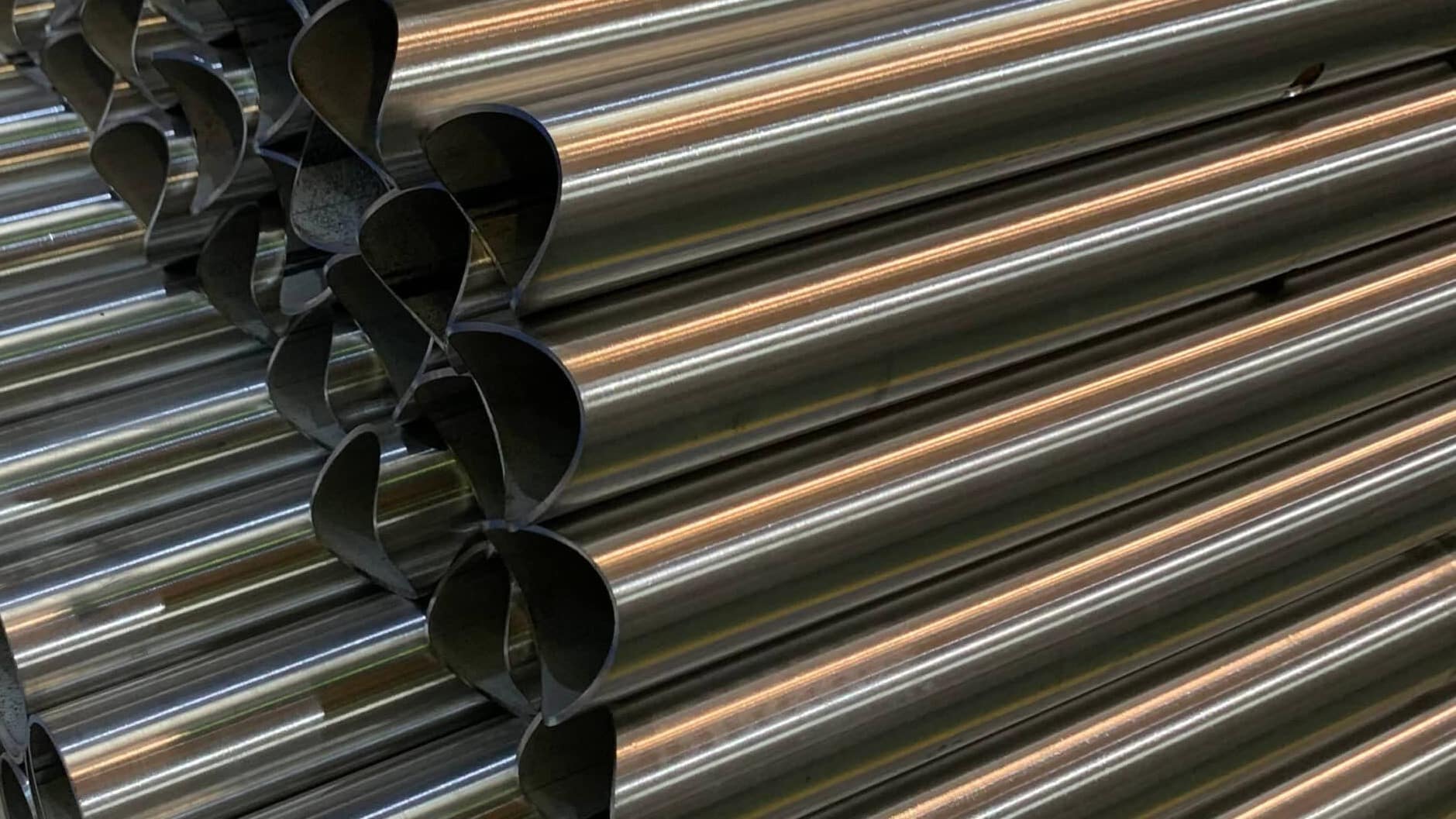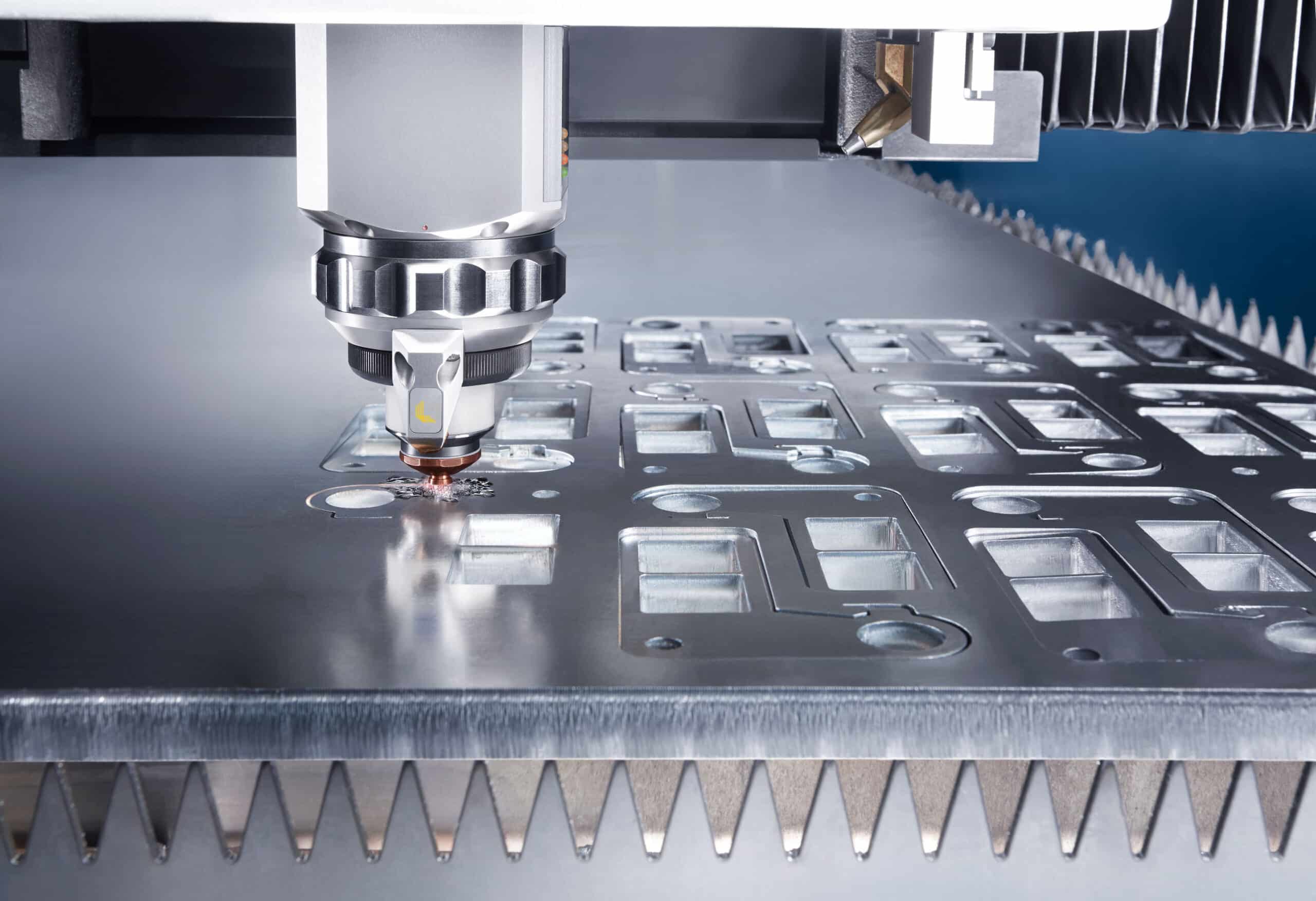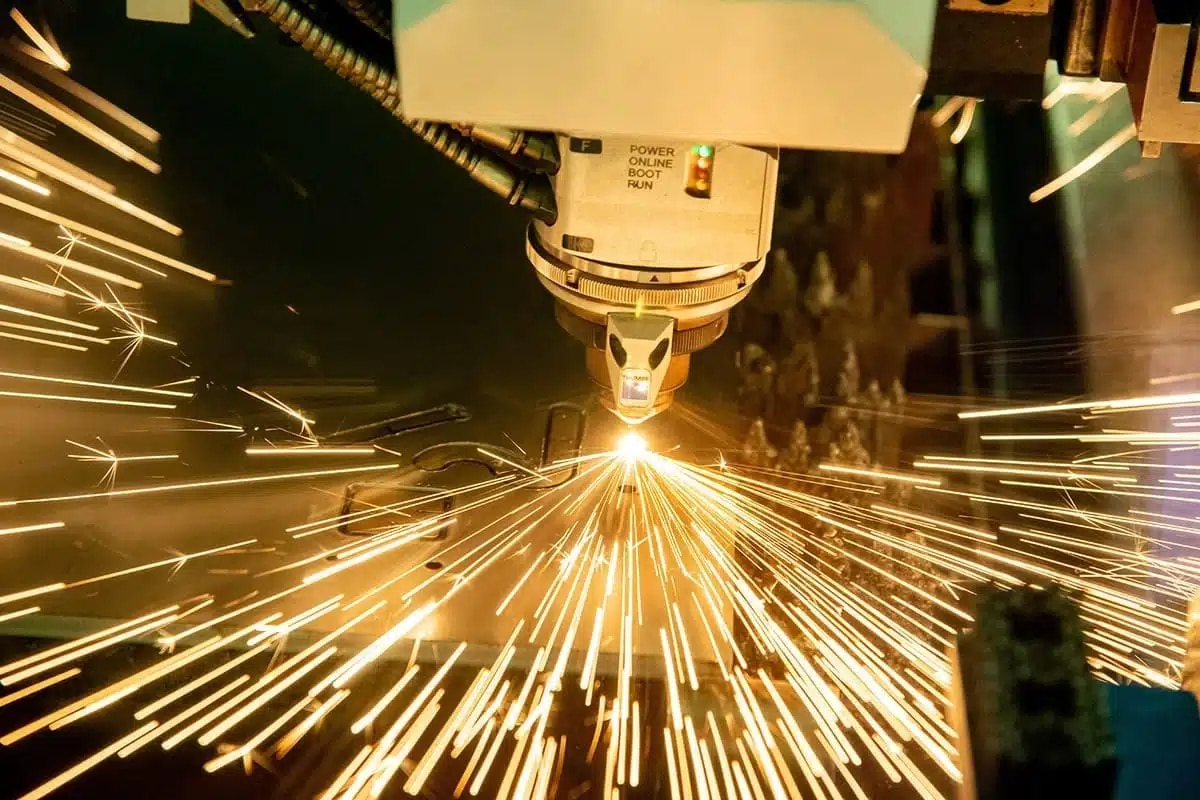
Laser cutting is an incredibly precise and efficient way to profile sheet metals, but it still faces a natural limit as to how thick a material can be cut. During the planning stages of a project, it’s important to understand how those limits help guide you toward the correct profiling process and material type, ensuring you maintain a high-quality finish.
What Can Affect How a Laser Cuts Metal?
The maximum cutting thickness depends on several key factors.
Laser Power
Highly powered fibre lasers, usually in the 20kW to 30kW range, can cut at much greater thicknesses compared to older or lower powered beams in the 6kW to 10kW range. Greater output allows the beam to maintain enough energy to fully penetrate and cut through denser materials.
Material Type
Each metal has distinct strengths and characteristics when exposed to a laser beam. Mild steel is one of the easiest to cut due to its capability to be assisted with oxygen, supporting the cutting reaction and maintaining strength. Whereas aluminium is more reflective and requires a higher energy output and nitrogen gas to achieve the same results.
Cut Requirements
Even though lasers accommodate thicker materials, if the edge quality is poor or the design is overly complex, then it may result in limitations during production. This can be seen with more intricate designs, cutting for tab and slot alignment, and kerf adjustments.
Technology
Modern fibre laser systems are much more capable than older technology, with greater beam control, assist gases, and motion systems that produce a cleaner and more consistent cut, even on thicker materials.

The Typical Material Thickness for Laser Cutting
While results vary between machines and suppliers, these ranges are commonly seen throughout industrial laser cutting in the UK.
Mild Steel
Typically go up to around 25mm to 50mm on high-powered fibre laser systems. Some specialist machines may go slightly beyond this, but cutting speed becomes very slow, and edge quality can suffer.
Stainless Steel
The maximum thickness for laser cutting steel is generally up to 25mm and 50mm, too, although thicker sections are more challenging. The cut edge may require additional finishing depending on the application.
Aluminium
The laser cutting thickness of aluminium is usually up to around 20mm to 40mm, as aluminium reflects more energy and conducts heat quickly, which makes deep cuts more difficult to achieve cleanly.
Copper and Brass
These materials are highly reflective and conductive, making them more challenging for laser cutting. Thickness capability is usually lower, often under 20mm, and depends heavily on machine capability and safety systems.
It is worth noting that while these are general maximums, many production environments focus on thinner gauges, where laser cutting performs more rapidly and accurately.
Why Thicker is Not Always Suitable for Laser Cutting
Even when lasers can cut thicker materials, there are some trade-offs to consider.
Firstly, as the thickness increases, the cutting speed is significantly reduced, which can result in higher cost per part and longer lead times. There can also be a reduction in edge quality, including slight bevel angles or rougher finishes that require secondary machining.
There is also increased heat input into the material, which can sometimes affect accuracy or introduce minor distortion in more sensitive areas. Because of this, laser cutting is often best suited for thin to medium-thickness metals, where its benefits really stand out.

Waterjet Cutting for Thicker Materials
If your project involves very thick plates or heavy structural sections, laser cutting may not always be the most efficient choice. Alternative technology, such as waterjet cutting, uses a high-pressure stream of water mixed with abrasive particles to erode material rather than melting it.
Because the waterjet process does not rely on heat, it can handle much thicker sections and a wider variety of materials. Waterjet systems can typically cut metals well beyond 100mm thick, depending on the material and machine setup. This makes it incredibly useful for heavy plates, composite materials, stone, and heat-sensitive components where thermal distortion must be avoided.
Waterjet cutting is generally slower than laser cutting and may have a wider kerf. However, when dealing with thicker materials and laser cutting specialists, it is often the preferred and most ideal choice.
Achieve Quality Cuts on Thicker Materials with The Laser Cutting Co.
If you’re unsure which method is right for your project, or if your drawing designs are more complex, then look no further than The Laser Cutting Co. Our expert team considers all aspects of your requirements, from material type, tolerances, speed, budget, and beyond, to achieve a high-quality finish.
Our laser cutting services routinely handle sheets up to 50mm thick, with our waterjet capabilities up to a depth of 230mm. With the ability to produce complex geometries and intricate designs, our team can assist your project from concept to the final product. Get in touch with a team member today to discover our full scope of services and offerings.