For most manufacturers, engineers, and procurement managers, maintaining a clear vision of budget during the laser cutting process is imperative. Understanding cost per part cannot always be determined by how long it takes to cut, with higher-value materials such as stainless steel and specialist alloys potentially affecting the final cost. This is where nesting in laser cutting becomes important, helping to maximise material yield, reduce waste and ultimately lower the cost per part.
How Does Nesting in Laser Cutting Work?
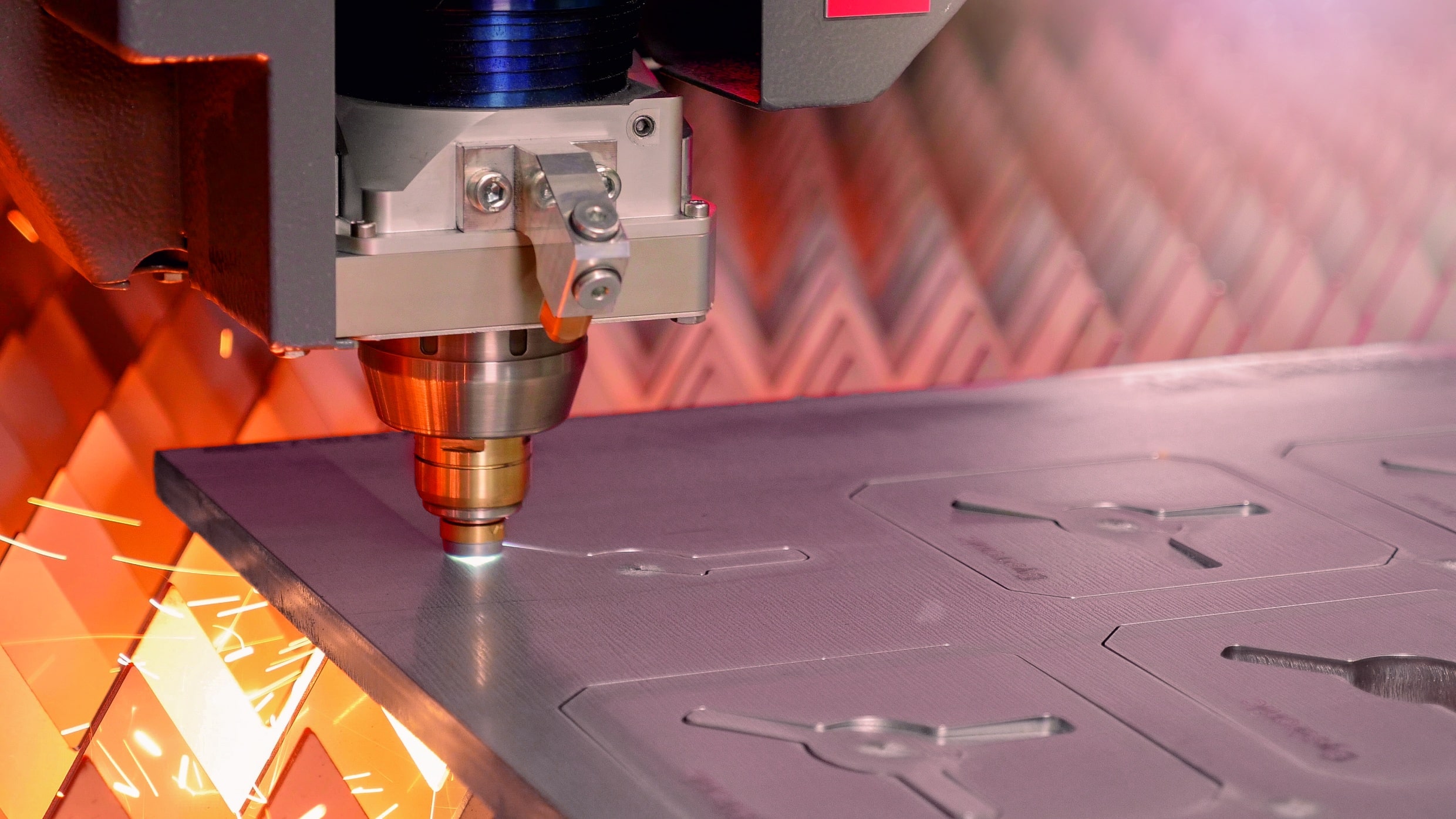
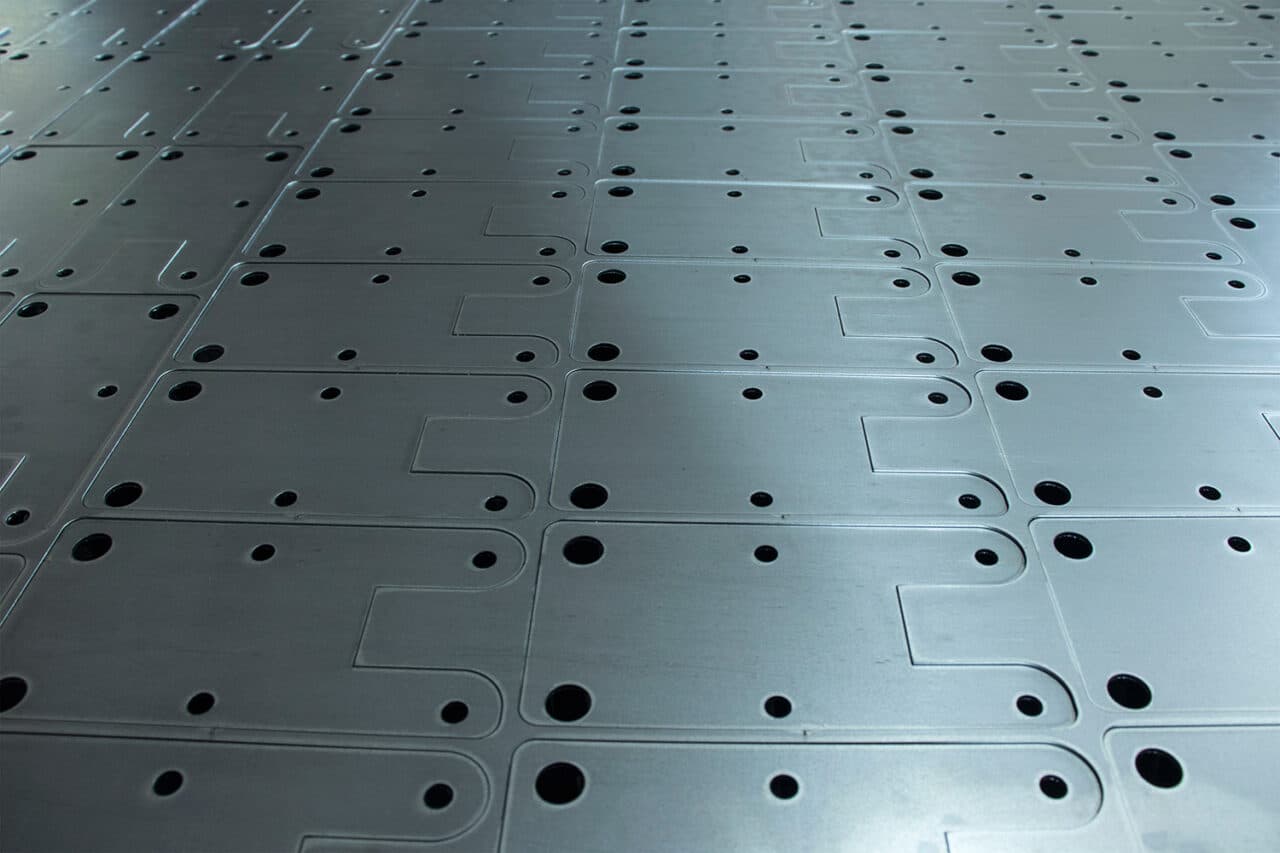
Nesting is the process of arranging multiple parts onto a sheet of material before laser cutting. This smart technique utilises CNC machines to fit as many parts as possible into the available sheet area, while still retaining the required spacing, cutting conditions and part quality.
Rather than treating each component individually, nesting software can assess the shapes, quantities and dimensions of each part and determine the most efficient cutting layout.
Improving Material Utilisation with Nesting
Advanced nesting software for laser cutting considers the geometry of each component, rather than stacking them uniformly. This allows the parts to be rotated and positioned to fit snugly alongside neighbouring components. The process considers factors such as:
- Part shape and dimensions
- Required quantity
- Material type and thickness
- Sheet size
- Required cutting clearances and kerf
- Grain or material direction where relevant
- Production requirements

Nesting and High-Volume Production
The benefits of nesting become increasingly important as production volume increases. A small amount of unused material on one sheet may not appear too significant, but when repeated over large orders, it can quickly add up.
For manufacturers, this makes yield an important consideration when looking for laser cutting services, and an efficient supplier should have the ability to take drawings and apply them to sheets economically. Additionally, this helps reduce waste and strive towards sustainable profiling within laser cutting projects.
Benefits of Nesting in Laser Cutting
Higher Yield
Nesting can fit more components onto each sheet and make sure all unused spaces are utilised, increasing the percentage of material that will become the finished part.
Lower cost per part
Better sheet utilisation means the cost of the raw material is spread across more components, helping reduce the material cost allocated for each part.
Reduced material waste
Efficiently positioning parts minimises the amount of leftover sheet material that becomes scrap, which is particularly important when cutting higher-value materials.
Efficient Production
A well-planned project can reduce cutting distance and rapid movements, while minimising human error through automation. This can help lower machine wear and reduce delays or additional processes.

Utilise Nesting on Your Next Project with The Laser Cutting Co.
At The Laser Cutting Co., nesting is part of our sheet metal laser cutting service. Our capability includes sheets up to 2000 x 4000mm, with larger sheets accommodated at our Sheffield sister site, Charles Day Steel. Our team have extensive experience working with a range of materials and project specifications, from large-scale production to intricate designs.
To discuss your project requirements and how we can support your project or source sheet metals, get in touch with a member of our friendly team.